Buying property in Florianópolis as a foreigner is possible on essentially the same terms as Brazilians. The Island, however, has legal features that many buyers only discover after signing: federal coastal land, environmental protection zones and specific rules for moving money in and out of the country. Here is a practical guide to buying property in Florianópolis safely.
1. Get your CPF first
The CPF is the Brazilian taxpayer number, and you cannot sign a deed, open a bank account or pay taxes without one. You can request it at a Brazilian consulate abroad or at the Federal Revenue Service (Receita Federal) in Brazil. If you will not live here, it is common to appoint an attorney-in-fact (procurador) in Brazil through a power of attorney, which lets the purchase proceed even while you are abroad.
A power of attorney signed abroad must either be issued at a Brazilian consulate or be apostilled under the Hague Apostille Convention. If it is in a foreign language, it also needs a sworn translation into Portuguese to take effect in Brazil (Law 6,015/1973, art. 148). The same applies to other foreign documents, such as a marriage certificate.
2. Check the property before you pay anything
In Brazil, the property’s history lives in its registry record, the matrícula, kept at the Real Estate Registry Office. Before signing any agreement or paying a deposit, a proper due diligence should include:
- An updated matrícula, showing who the owner is and whether there are mortgages, liens or lawsuits attached to the property
- Certificates on the seller: civil, labor and tax lawsuits, and protests
- Property tax (IPTU) and condominium fees fully paid
- Building permits and the occupancy certificate (habite-se), confirming that what was built matches what was approved
- No condominium debts: the buyer becomes liable for the seller’s unpaid condominium fees, including fines and interest (Civil Code, art. 1,345), so ask the condominium for a statement of no debts
- The seller’s marital status: unless married under total separation of property, the seller’s spouse must consent to the sale (Civil Code, art. 1,647). Your own marital regime is also stated in the deed (art. 215, §1, III)
3. Coastal land owned by the Federal Government (terreno de marinha)
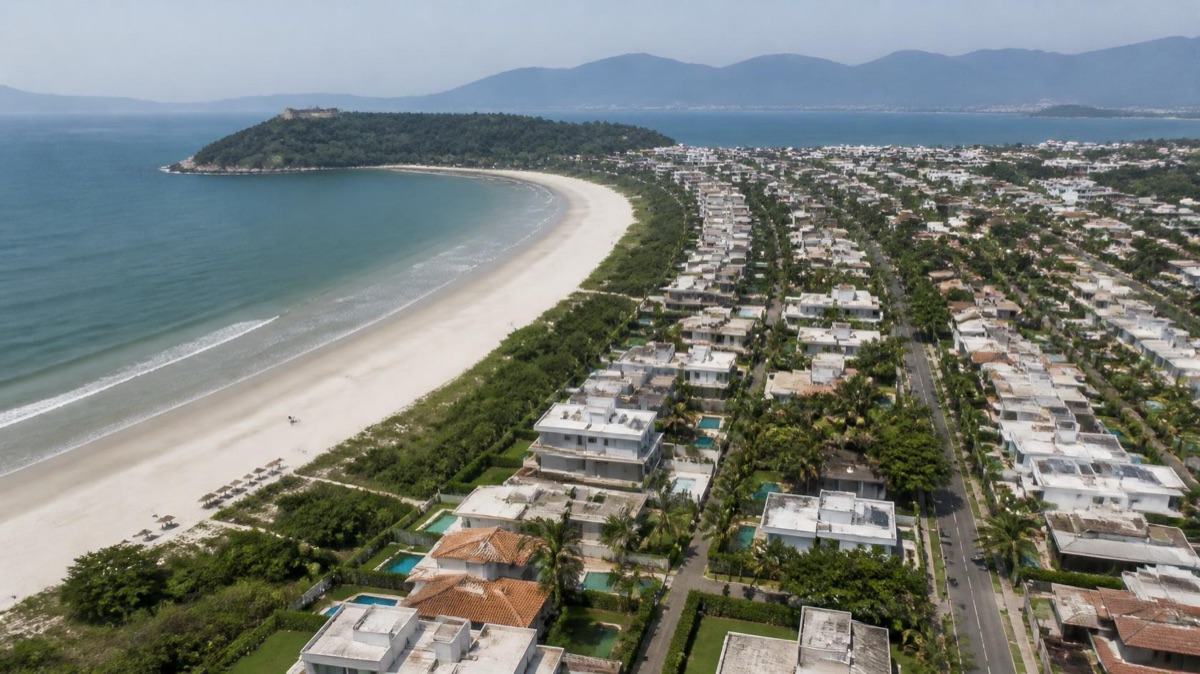
This is the point most foreign buyers have never heard of. Under Decree-Law 9,760/1946 (art. 2), a 33-metre strip of land, measured inland from the average high-tide line of 1831, belongs to the Brazilian Federal Government. It runs along the coast, around islands such as Santa Catarina Island, and along rivers and lagoons wherever the tide is felt. Much of the waterfront in neighborhoods such as Jurerê, Canasvieiras, Ingleses and Campeche falls into this category.
If the property is on terreno de marinha, you do not acquire full ownership of the land, only the right to occupy or use it. In practice this means:
- Notaries and registries cannot process the deed without a certificate from the Federal Property Department (SPU) confirming that the laudêmio was paid and that the seller has no pending obligations on the property (Decree-Law 2,398/1987, art. 3, §2)
- A transfer fee called laudêmio, paid by the seller, equal to 5% of the updated value of the land, excluding buildings and improvements (Decree-Law 2,398/1987, art. 3)
- The owner pays an annual federal fee on top of the municipal property tax
- Within 100 metres of the coastline, transferring federal land to a foreigner requires federal authorization. There are exemptions for condominium units in urban areas, within legal limits, and, for individuals, for plots of up to 1,000 m² (Decree-Law 9,760/1946, art. 205)
4. Environmental protection areas
Under the Brazilian Forest Code (Law 12,651/2012, art. 4), Permanent Preservation Areas (APP) in Florianópolis include the restinga that stabilises dunes, mangroves, strips along rivers and around lagoons (at least 30 metres in urban areas), springs, slopes steeper than 45° and certain hilltops. A house built partly or entirely in a protected area can face fines, embargoes or even demolition.
In Brazil, environmental obligations follow the property. The new owner can be held responsible for damage caused by a previous owner (Law 12,651/2012, art. 2, §2, and Superior Court of Justice Precedent 623). That is why zoning and environmental checks with the City and the environmental agencies are part of any serious due diligence on the Island.
5. Bring the money in the right way
Funds for the purchase should come from abroad through a bank or institution authorized to operate in foreign exchange, under Brazil’s foreign exchange law (Law 14,286/2021). Keep every exchange contract and receipt. This documentation is what supports sending the money back out of Brazil when you sell. Informal transfers make that much harder. Brazilian banks rarely grant mortgages to non-residents, so most foreign buyers pay with their own funds.
6. The deed and the registration
A property purchase is formalized through a public deed (escritura pública) signed before a notary, which the Civil Code requires for properties worth more than 30 times the minimum wage (art. 108). If a party does not speak Portuguese and the notary does not understand their language, a sworn public translator must act as interpreter (Civil Code, art. 215, §4). Before closing, budget for the municipal transfer tax (ITBI), notary fees and registration fees.
The most important step comes last. Under Brazilian law you only become the owner when the deed is registered in the property’s matrícula. A signed deed that is never registered does not transfer ownership (Civil Code, art. 1,245).
7. Think ahead about selling
Non-residents who sell property in Brazil pay capital gains tax. The law makes the buyer responsible for withholding and paying it, or the buyer’s attorney-in-fact if the buyer also lives abroad (Law 10,833/2003, art. 26). Under Brazil’s tax reform, individuals who sell more than three properties a year, or who build and sell properties, may also become subject to the new IBS and CBS taxes (Complementary Law 214/2025, art. 251). Planning this at the time of purchase avoids problems later.
Buying property may also be one of the paths to a Brazilian residence permit, which is worth discussing if you plan to spend more time here.
8. Properties without a registry record
In several neighborhoods of the Island, properties are sold without a matrícula, through a “transfer of rights” (cessão de direitos) or a “possession rights” contract. In these cases you buy possession, not ownership: without registration, you are not the owner (Civil Code, art. 1,245). The risks include claims by the registered owner, no building permits and difficulty reselling the property.
Possession can sometimes become ownership through adverse possession (usucapião, Civil Code, arts. 1,238 to 1,244) or through urban land regularization (Reurb, Law 13,465/2017), but both take time and are not guaranteed. Before paying for a property without a matrícula, get a legal assessment of whether and how it can be regularized.
9. Buying off-plan
Florianópolis has many new developments sold before construction. The developer may only sell units after registering the development (memorial de incorporação) at the Real Estate Registry (Law 4,591/1964, art. 32), so ask for the registration before signing. Also check whether the project is under the segregated assets regime (patrimônio de afetação), which keeps the project’s land and funds apart from the developer’s other assets (art. 31-A).
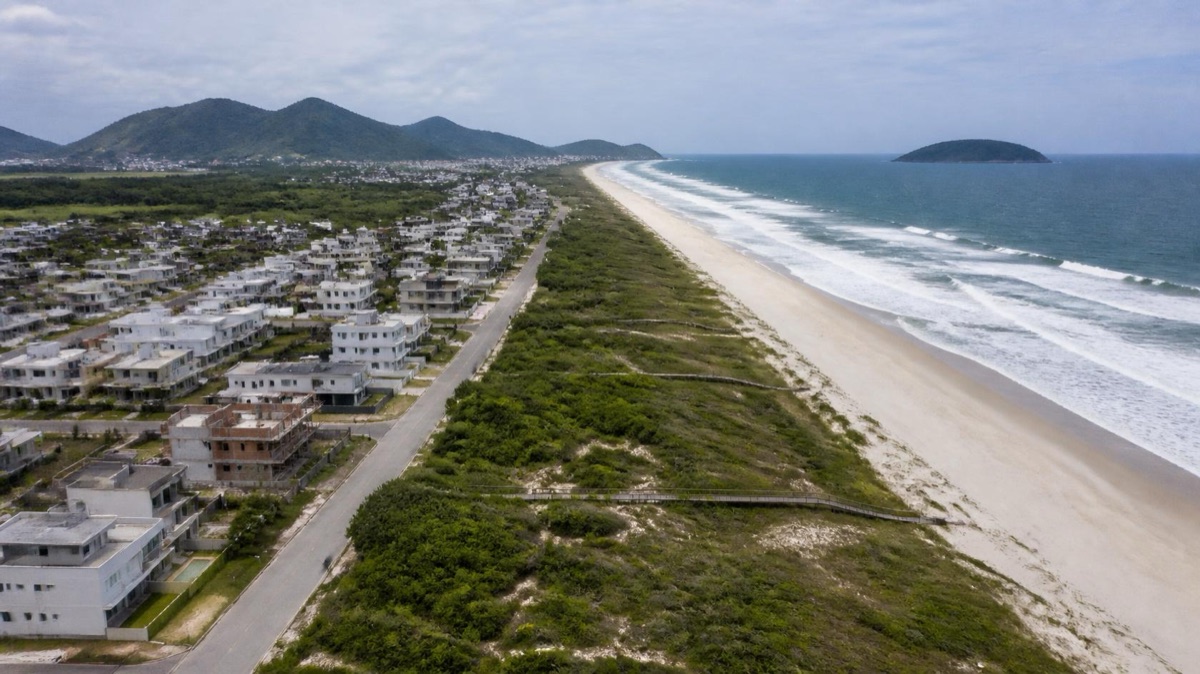
If the buyer cancels the purchase, the developer may keep the brokerage fee and a penalty of up to 25% of the amount paid, or up to 50% in projects under the segregated assets regime (art. 67-A, included by Law 13,786/2018).
10. Inheritance: plan ahead
If a foreign owner dies, the probate of property located in Brazil must be handled in Brazil, even if the owner was a foreign national living abroad (Code of Civil Procedure, art. 23, II). As a rule, the inheritance tax (ITCMD) on property in Brazil is due to the state where it is located, in this case Santa Catarina (Federal Constitution, art. 155, §1, I). A will and early planning, including the choice between buying as an individual or through a company, make the process faster and less costly for the heirs.
Frequently asked questions
Can a foreigner buy property in Florianópolis?
Yes. Foreigners can buy urban property in Brazil on essentially the same terms as Brazilians, as long as they have a CPF. Within 100 metres of the coastline, transferring federal land to a foreigner may require federal authorization (Decree-Law 9,760/1946, art. 205).
What is terreno de marinha?
It is a 33-metre strip of land measured from the 1831 average high-tide line, owned by the Federal Government. The buyer acquires the right to occupy or use it, the seller pays a 5% laudêmio on the land value, and the deed requires a certificate from the SPU.
When does the buyer become the legal owner?
Only when the deed is registered in the property’s matrícula at the Real Estate Registry Office (Civil Code, art. 1,245). A signed deed alone does not transfer ownership.
Buy with local legal advice
A purchase in Florianópolis involves federal, municipal and environmental rules that do not appear in a standard sales contract. Independent legal advice, on your side and not the seller’s or the agent’s, is an important protection for your investment.
This article is for general information only and does not replace individual legal advice.

Ana Paula Gasques, Lawyer, OAB/SC 77.722.
Real estate and legal assistance for foreigners in Florianópolis.